
A customer taps their card and the payment is approved in under two seconds. So why does it take two or three business days for that money to reach your bank account?
The answer involves a network of banks, card networks, and settlement processes that most business owners never think about — until cash flow gets tight.
Authorization vs. settlement: when a card is approved, that's just an authorization. The bank is reserving funds and promising to pay. The actual movement of money happens later, during settlement.
The settlement process: at the end of each business day, your processor sends a batch of authorized transactions to the card networks (Visa, Mastercard, Amex). The networks route the transactions to the issuing banks (the banks that gave your customers their cards). Those banks transfer the funds to the acquiring bank (your processor's bank). Your processor then sends the net amount to your bank account.
Why the delay: each of those steps involves an ACH transfer between banks. The US ACH network traditionally settles in one to two business days. Weekends and federal holidays don't count as business days.
Next-day funding: most major processors now offer next-day funding for transactions processed before a cutoff time (typically 5-8 PM). Square, Stripe, and most traditional processors offer this as standard or for a small fee.
Same-day funding: some processors offer same-day deposits for a higher fee, often $0.25-$1.00 per transfer. For businesses with tight cash flow, this can be worth it.
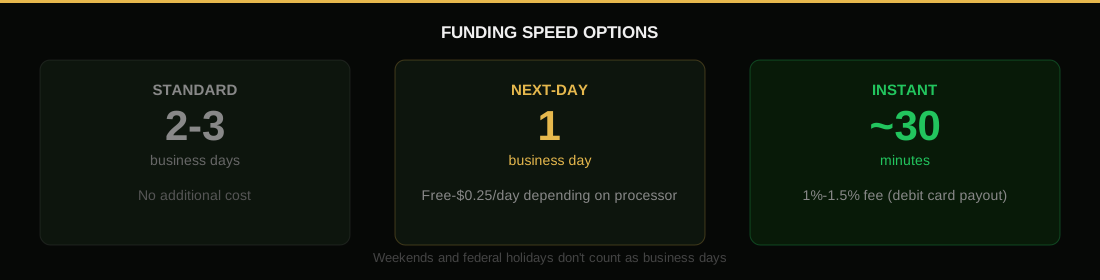
Instant payouts: Stripe and Square both offer instant payout options for a 1-1.5% fee, depositing funds to a debit card within minutes. Expensive, but useful for emergencies.
Holds and reserves: new merchant accounts often have a rolling reserve — typically 5-10% of transactions held for 90-180 days. If you're experiencing unexpected holds, review your merchant agreement for reserve terms.
The practical takeaway: understand your processor's funding schedule before you open your account, not after. For retail, next-day funding is usually fine. For businesses with large transactions or significant inventory purchases, the timing matters.