Why Your Processor Can Raise Rates Without Telling You
Most merchant agreements include a clause that lets the processor increase fees at will. Here's where to find it and what to do about it.
Most merchant agreements include a clause that lets the processor increase fees at will. Here's where to find it and what to do about it.
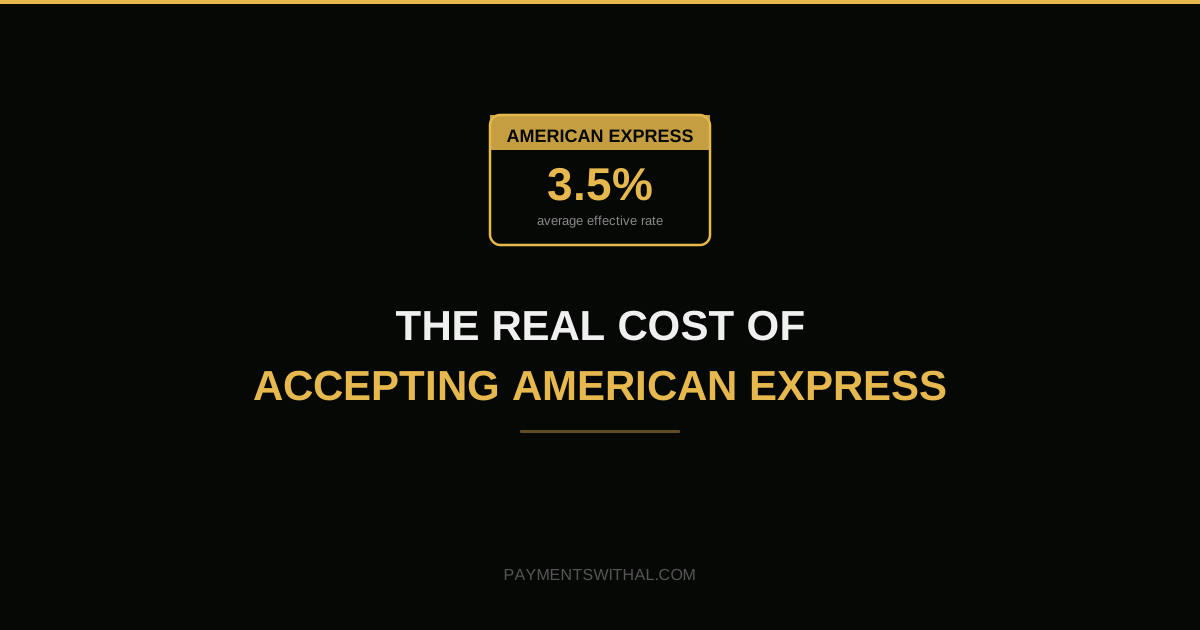
American Express has a reputation for being expensive. But the gap has narrowed, and refusing Amex might cost you more than accepting it.
Interchange is the biggest chunk of what you pay to accept cards. Here's who controls it, how it's calculated, and why your processor can't lower it.
If you sell to businesses or government agencies, sending additional transaction data can slash your interchange rate. Here's how.
The same debit card can cost you two different rates depending on whether the customer enters a PIN. Here's which is cheaper and why.
Every day you don't close your batch is a day you're paying higher interchange rates. Here's the fix.
Some processors lock you in with ETFs of $500 or more. Here's how to spot them before you sign and how to get out if you're already stuck.
Your merchant agreement isn't a take-it-or-leave-it contract. It's a first offer. Here's how to push back on the terms that cost you money.
The same card can cost you two different rates depending on whether it's physically present at checkout — and the gap can be 40% or more.
A monthly minimum sounds harmless — until you realize it's a guaranteed floor on your processing cost, regardless of how little business you actually do.