The Durbin Amendment Explained: Why Debit Should Cost You Less (But Often Doesn't)
A 2010 federal law capped debit card interchange at about 0.05% + $0.22 — so why is your debit processing still expensive? The answer is in your pricing model.
A 2010 federal law capped debit card interchange at about 0.05% + $0.22 — so why is your debit processing still expensive? The answer is in your pricing model.
Every merchant pays some form of PCI fee, but the amount — and what you actually get for it — varies wildly from one processor to the next.
A line-by-line guide to reading your merchant statement — so you always know exactly what you're paying and why.
The legal difference between cash discounting and surcharging — and how to implement either without violating card network rules.
How chip, tap, and swipe payments differ in cost, security, and liability — and what it means for your bottom line.
The real reason your payment deposits take 2-3 business days — and what's happening to your money in the meantime.
Everything merchants need to know about chargebacks — how they work, what they cost, and how to fight them.

A guide to the fees hiding on your merchant statement — and how to know if you're being overcharged.
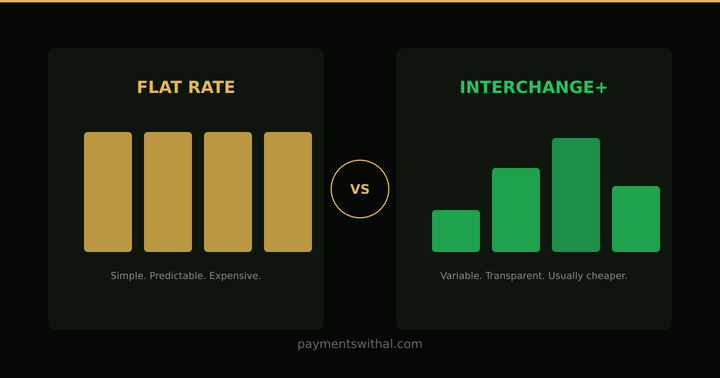
A plain-English breakdown of flat rate vs. interchange-plus pricing — with real numbers so you can decide which saves you more.
The full step-by-step breakdown of how a card payment actually works — from swipe to bank deposit.